


For medical, pharmacy and nursing education

Learn medicine by making decisions, not by memorising them

Treat a patient whose vitals respond to your decisions, write the prescription, face the examiner. Every attempt comes back marked, with the reason for every mark you lost and what to practise next.

  • Manage simulated patients who deteriorate if you get it wrong
  • Write prescriptions and see every dose, interaction and allergy error explained
  • Sit timed OSCE stations and viva questions, then get a score by domain

An illustration of the platform in use: a simulated patient’s observations change in response to the learner’s decisions, a prescription is checked against the drug database and flagged for renal dosing and an interaction, and the attempt is scored by clinical domain.

9
Ways to practise, from case simulation to OSCE stations
169
Drug monographs your prescriptions are checked against
7 days
Free Student Pro trial for every new account, no card
Every attempt
Scored by domain and explained line by line

Nine ways to practise

Each module is a complete tool with its own scoring model, not a demo screen.

Structured prescribing and therapeutics courses

Browse all courses
PharmacologyUndergraduate
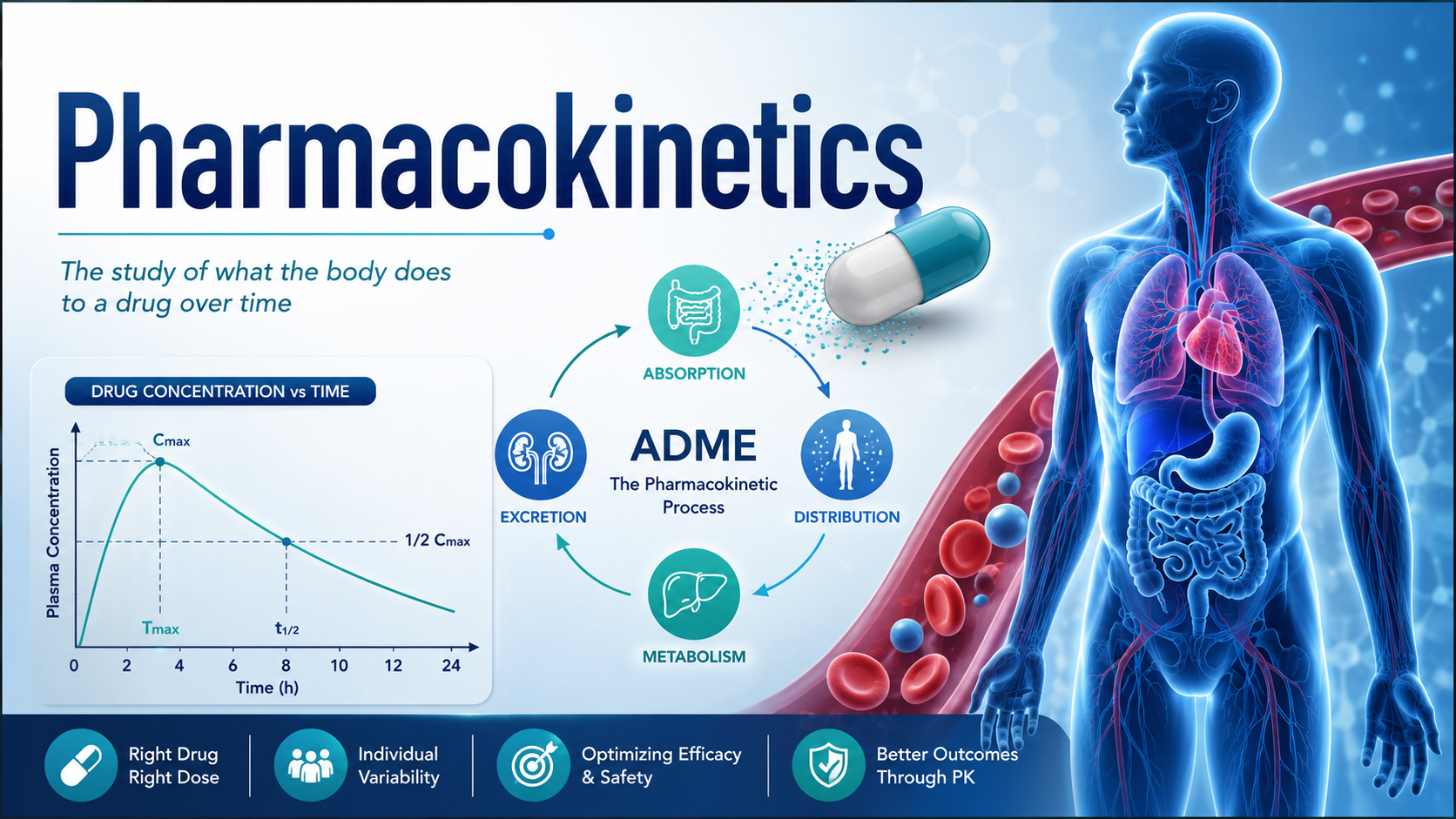
A free course for medical, pharmacy and nursing students who want a working grasp of how the body handles drugs. It covers absorption, distribution, metabolism and excretion, then clearance, volume of distribution, half-life and bioavailability, and applies them to concentration-time curves, steady state, loading and maintenance doses, and dose adjustment when renal or hepatic function changes.
5 modulesFree
Final year
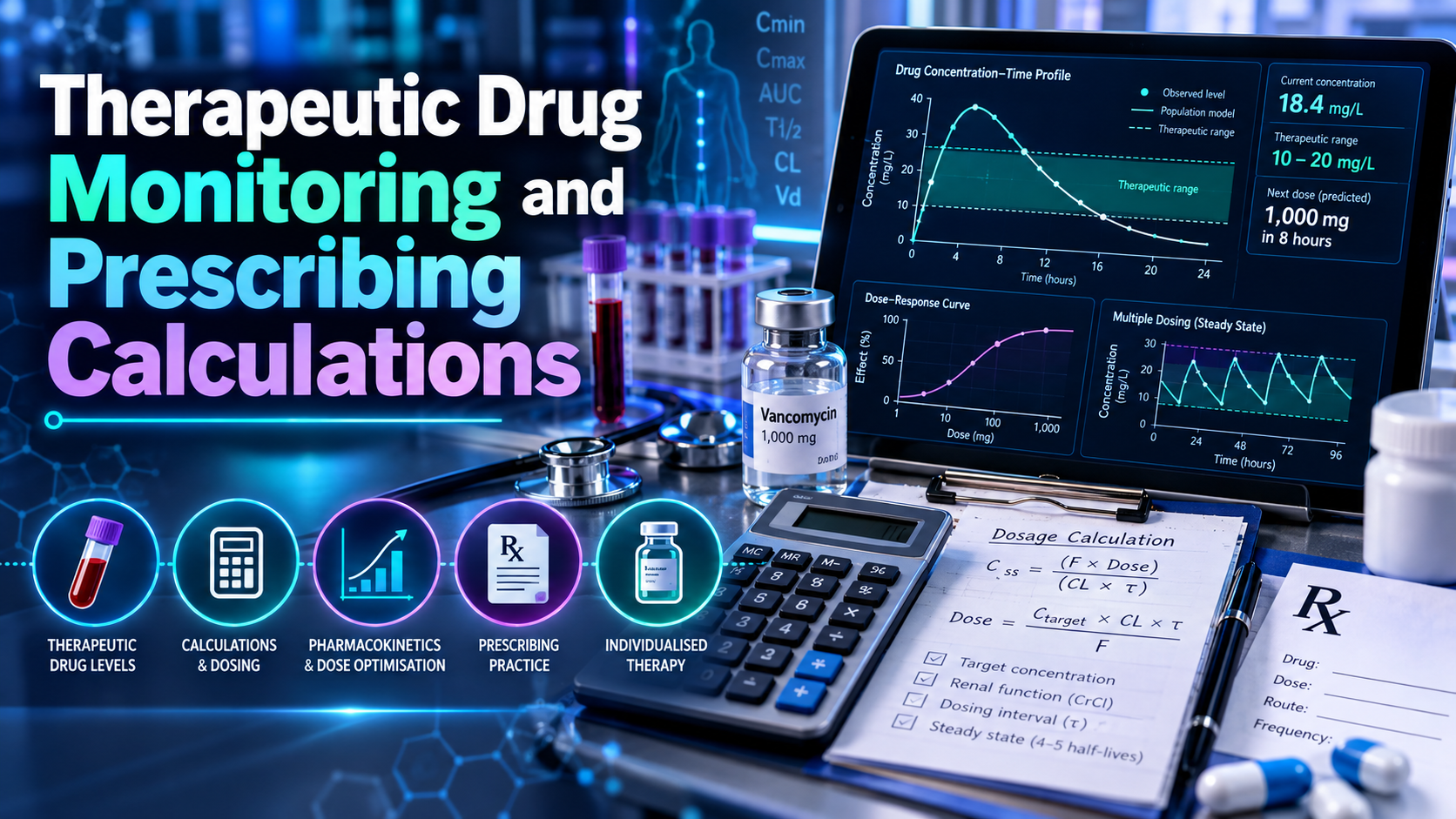
For final-year medical students preparing for finals and the Prescribing Safety Assessment (PSA), final-year pharmacy students, and foundation doctors. Topics: prescribing calculations, applied pharmacokinetics and therapeutic drug monitoring of narrow-therapeutic-index drugs, and interpreting potassium, sodium, renal, thyroid and liver results. UK practice, BNF dosing and NICE-style guidance. Pharmacy students do not sit the PSA.
4 modules 7 hIncluded in plan
Final year
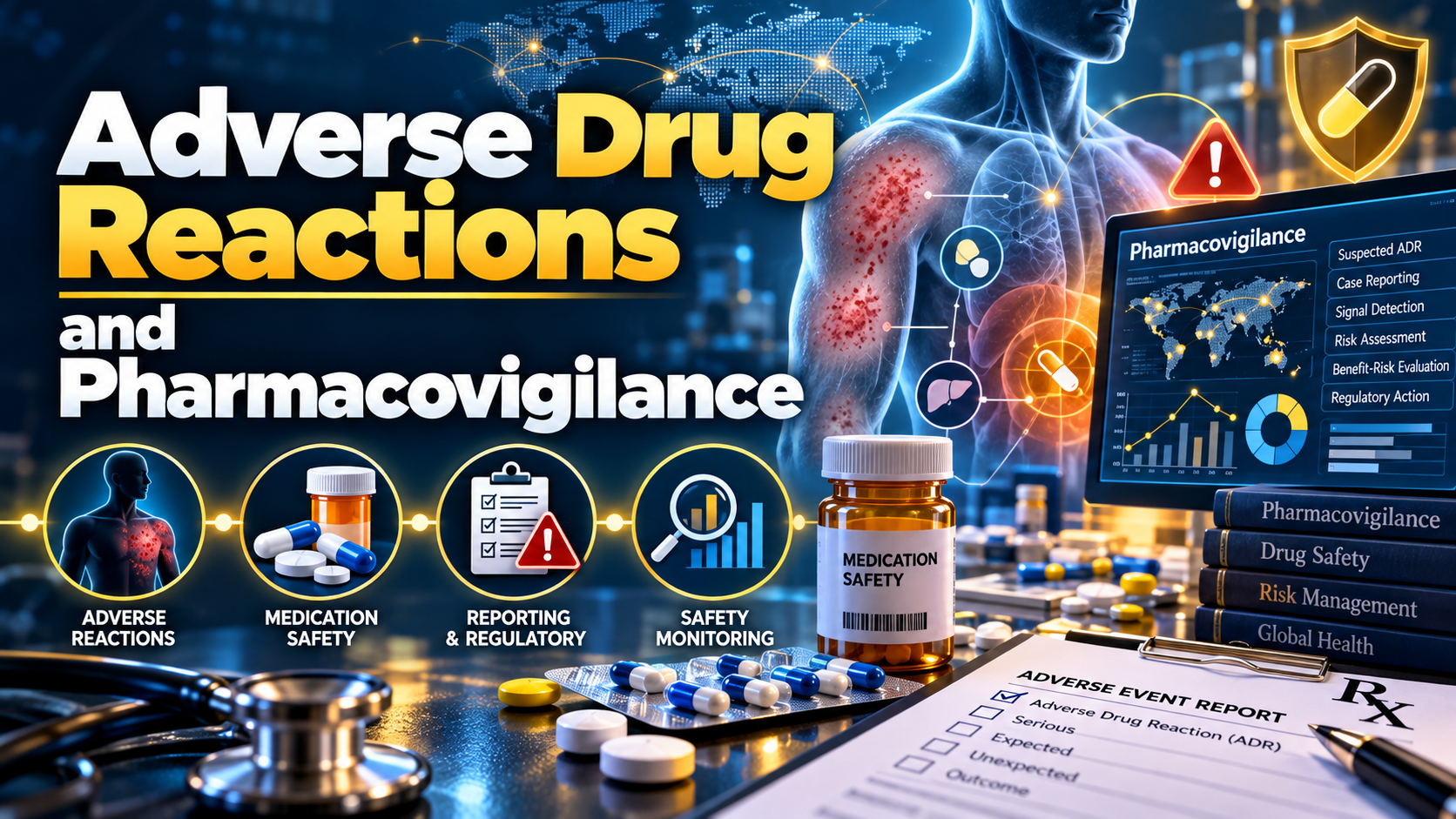
For final-year medical students preparing for finals and the PSA, final-year pharmacy students and foundation doctors. Covers what counts as an ADR, A to F and DoTS classification, WHO-UMC and Naranjo causality, severity versus seriousness, type A reactions, allergy, organ-specific harm, and Yellow Card reporting. Every module closes with a quiz. Practice includes prescribing scenarios, timed OSCE stations and ADR cases to assess and report.
4 modules 7.5 hIncluded in plan
Final year
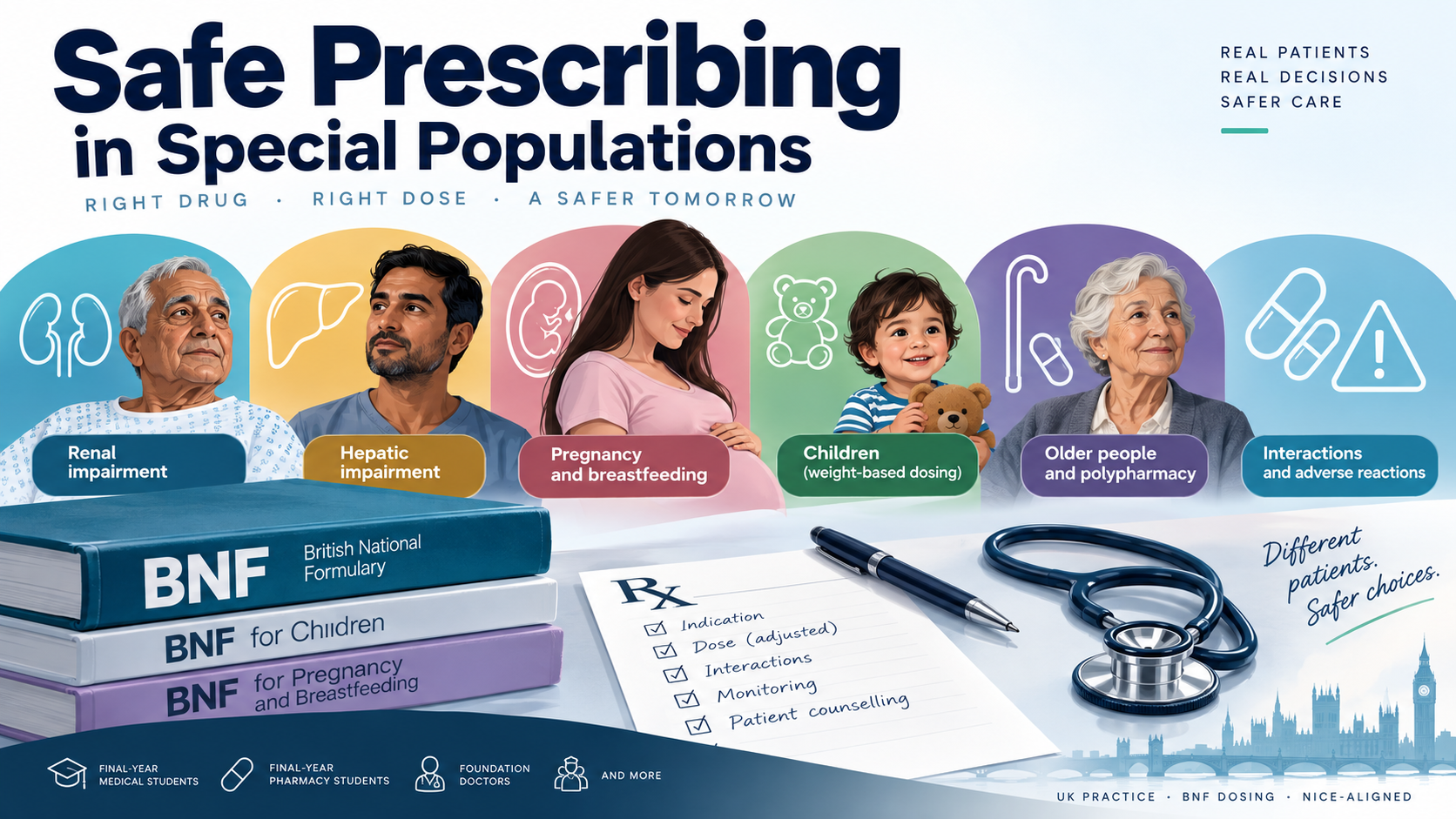
Prescribing where standard adult doses cause harm, in UK practice with British National Formulary dosing, for final-year medical students preparing for finals and the Prescribing Safety Assessment, final-year pharmacy students and foundation doctors. It covers renal and hepatic impairment, pregnancy and breastfeeding, weight-based dosing in children, polypharmacy and deprescribing in older people, and serious interactions and adverse drug reactions.
4 modules 8 hIncluded in plan
Final year
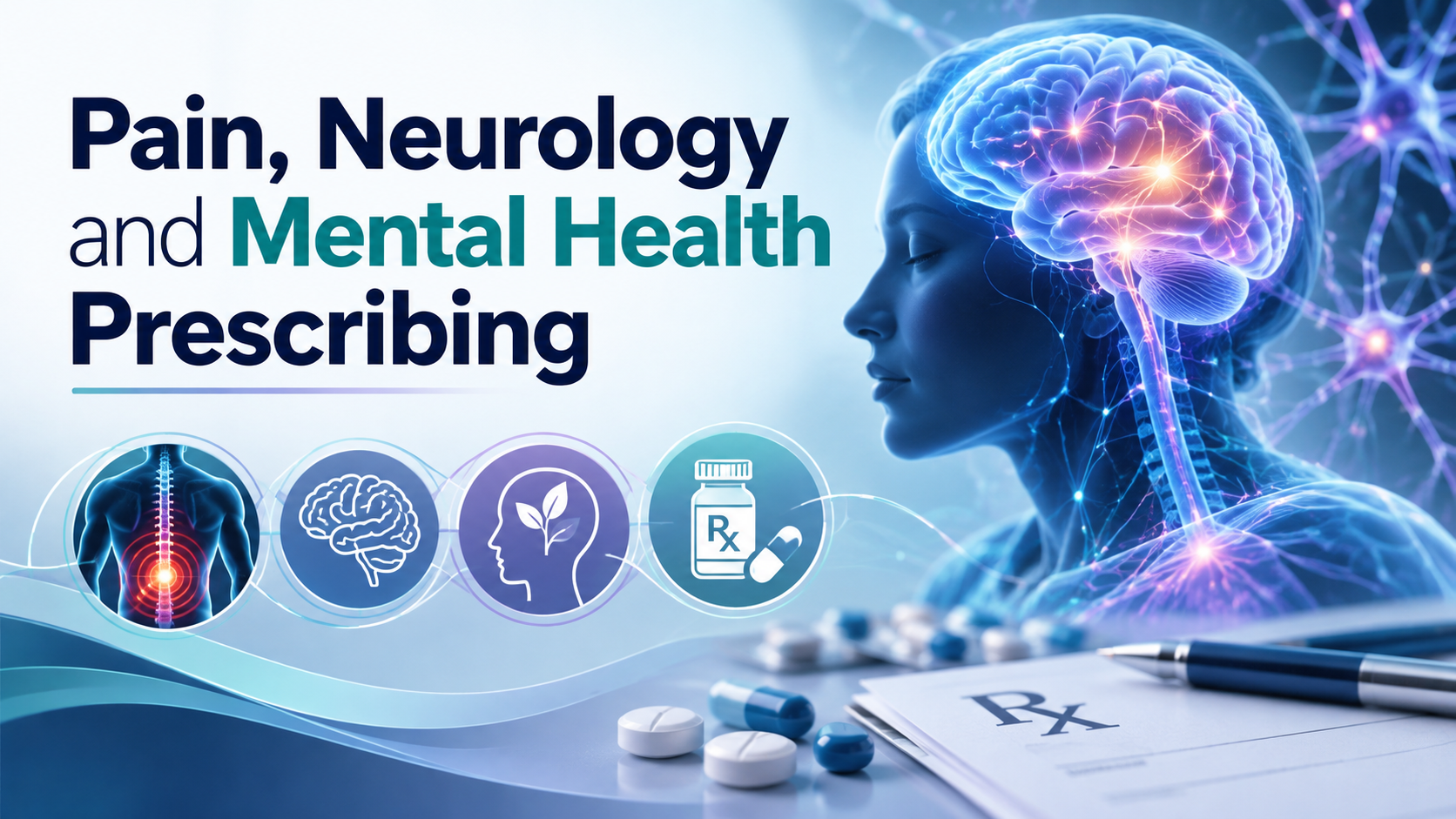
Pain, neurological and psychiatric prescribing in UK practice, for final-year medical students preparing for finals and the Prescribing Safety Assessment, final-year pharmacy students and foundation doctors. It covers the analgesic ladder, opioid and NSAID safety, neuropathic pain, epilepsy and valproate risk, migraine, Parkinson's disease, depression, lithium, anxiety and sleep, psychosis, rapid tranquillisation and delirium. Doses follow the British National Formulary.
4 modules 6.5 hIncluded in plan
Final year
Respiratory drug therapy and assessment in UK practice, for final-year medical students preparing for finals and the Prescribing Safety Assessment, final-year pharmacy students and foundation doctors. It covers stepwise asthma management, inhaler technique, acute severe asthma in adults and children, COPD inhaled therapy and infective exacerbations, controlled oxygen and type 2 respiratory failure, and respiratory examination, chest radiographs and bronchiolitis.
3 modules 4 hIncluded in plan
Final year
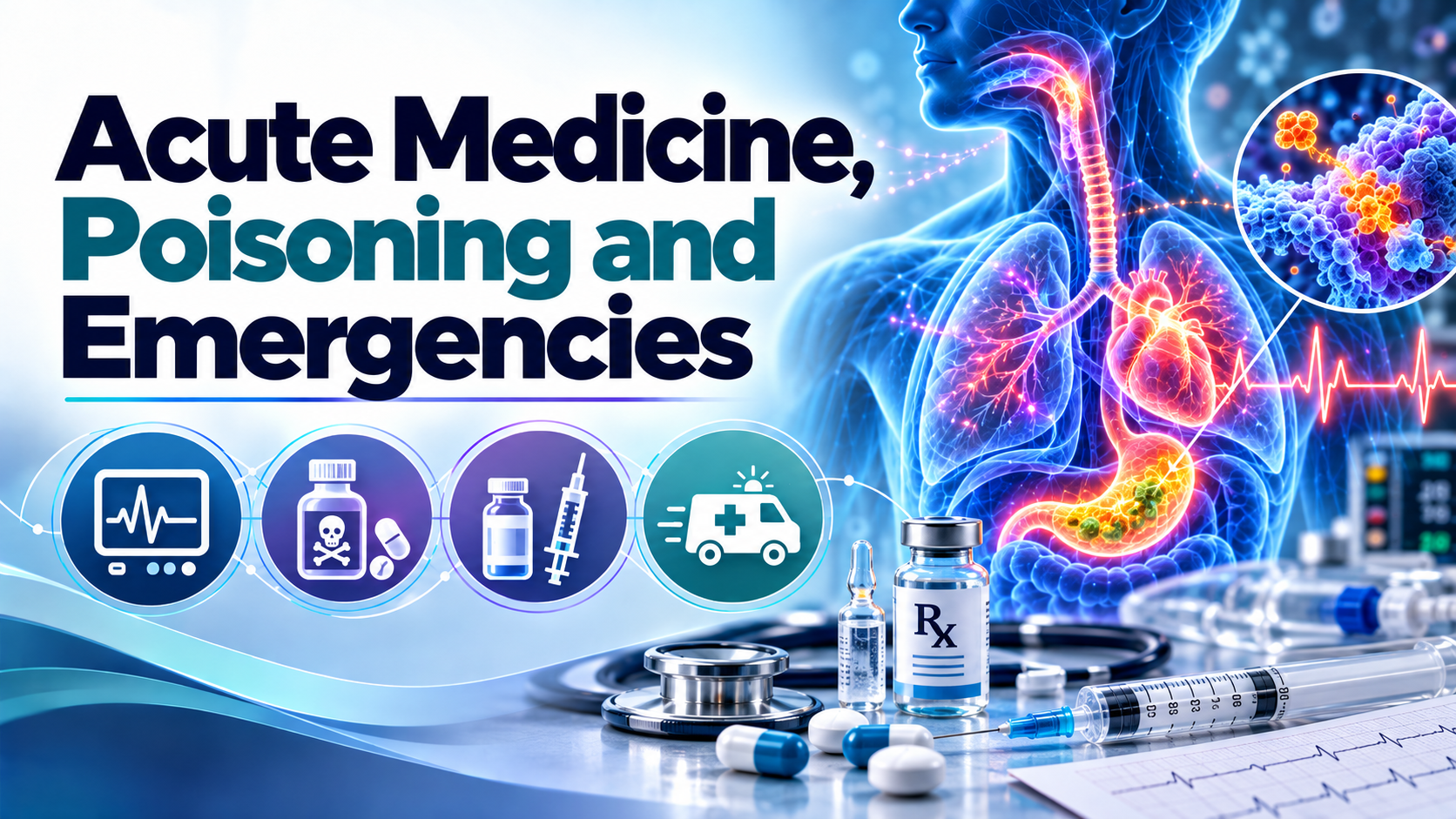
Acute medicine and emergency prescribing in UK practice, for final-year medical students preparing for finals and the Prescribing Safety Assessment, final-year pharmacy students and foundation doctors. It covers ABCDE assessment, basic life support, anaphylaxis, poisoning and antidotes for paracetamol, opioids and lithium, alcohol withdrawal, intravenous fluids, acute kidney injury and hyperkalaemia, blood gases, upper GI and variceal bleeding, status epilepticus and subarachnoid haemorrhage.
4 modules 7 hIncluded in plan
Final year
Diabetes and endocrine prescribing in UK practice, for final-year medical students preparing for finals and the Prescribing Safety Assessment, final-year pharmacy students and foundation doctors. It covers choosing and intensifying type 2 diabetes therapy, insulin regimens and sick-day rules, hypoglycaemia, the variable rate insulin infusion, DKA and HHS, thyroid disease, corticosteroids and adrenal crisis, and calcium and sodium disorders. Dosing follows the British National Formulary.
4 modules 7.5 hIncluded in plan
Final year
Antibiotic prescribing and infection management in UK practice, for final-year medical students preparing for finals and the Prescribing Safety Assessment, final-year pharmacy students and foundation doctors. It covers the antibiotic classes, stewardship and C. difficile, penicillin allergy, gentamicin dosing, sepsis, pneumonia, COPD exacerbations and tuberculosis, urinary, skin and soft tissue infection, meningitis, malaria and dengue in returning travellers, and febrile neutropenia.
4 modules 8 hIncluded in plan

How a session works

The same loop across every module: decide, get judged, understand why.

  1. 1

    Meet the patient

    A presentation, a chart and a set of vitals that will move depending on what you do next.

  2. 2

    Make decisions

    Order, examine, diagnose, prescribe. Each choice changes the patient's state.

  3. 3

    Get scored

    Deterministic rules and weighted checklists produce a score by domain, with critical failures called out.

  4. 4

    See the reasoning

    Every item is explained: what the safe answer was and what made yours unsafe.

Built for the whole programme

Students

Practise safely, repeatedly and at your own pace, before the decisions have consequences.

Faculty

Author cases, questions and stations, with AI drafting that always lands in review rather than straight into the bank.

Institutions

Cohort management, curriculum mapping, assessment delivery and outcome analytics under one tenant.

From the blog

All articles
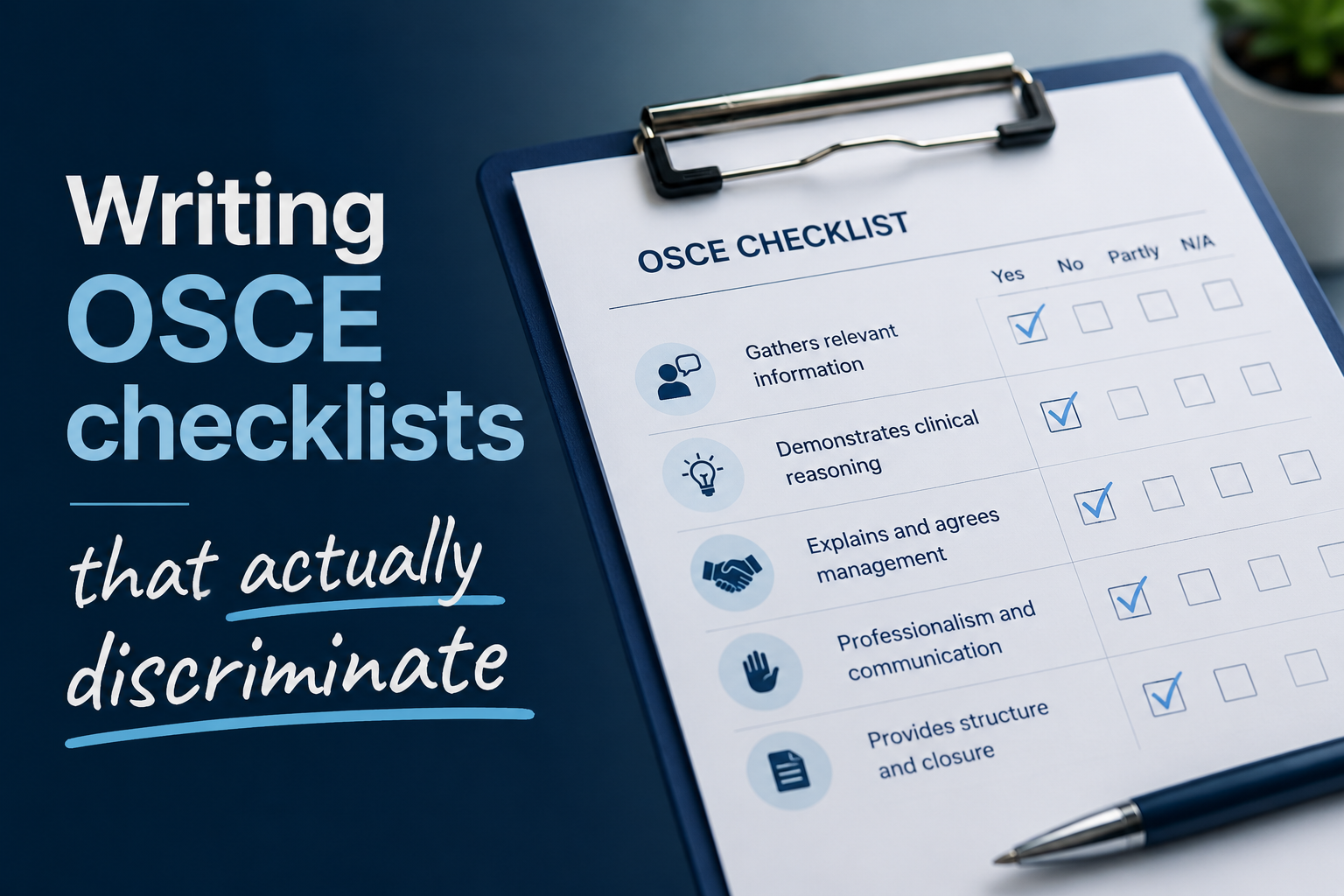
writing osce checklists
Assessment designFeatured

Writing OSCE checklists that actually discriminate

Learn how to design OSCE checklists that distinguish competent from weak performance. This guide covers common pitfalls, item writing, weighting, and piloting for high-stakes assessment.

7 min read
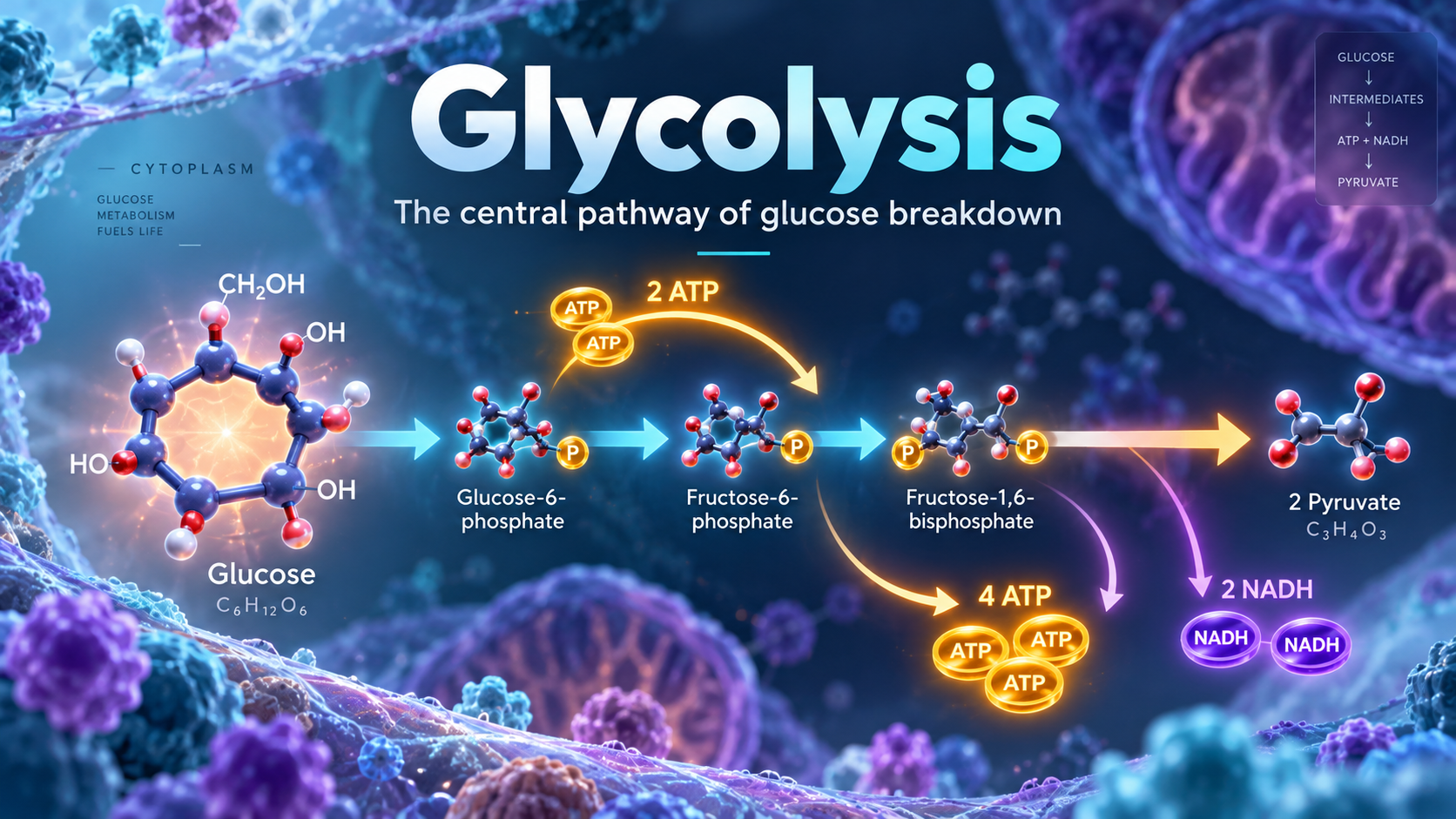
glycolysis
Biochemistry

Glycolysis: The Central Pathway of Glucose Breakdown

Discover glycolysis step by step: its 10 reactions, key enzymes, ATP production, regulation, and clinical importance in human metabolism and diseases.

Platform Administrator 7 min read

Start with the free tier

Create an account and run a clinical case today. No card required.