Pharmacotherapy of Glaucoma: Classification, Mechanisms of Action, and Clinical Management
This summary covers the classification, mechanisms of action, clinical uses and adverse effects of drugs used in glaucoma, plus current treatment approaches for open-angle and angle-closure glaucoma, combination therapies and newer drug-delivery systems.

Glaucoma is a group of progressive optic neuropathies characterised by damage to retinal ganglion cells and their axons, resulting in characteristic changes in the optic nerve and visual field. Although elevated intraocular pressure (IOP) is an important risk factor, glaucoma can also develop when IOP is within the statistically normal range.
The primary aim of glaucoma treatment is to preserve visual function by preventing or slowing further optic nerve damage. Reducing IOP remains the only established modifiable treatment target. Pharmacotherapy achieves this by reducing aqueous humour production, increasing its drainage from the eye, or using both mechanisms [1,2].
Several classes of medicines are available, including prostaglandin analogues, beta-adrenergic blockers, alpha-2 adrenergic agonists, carbonic anhydrase inhibitors, Rho kinase inhibitors and cholinergic drugs. Their selection depends on the type and severity of glaucoma, the required reduction in IOP, associated medical conditions, adverse effects and the patient's ability to follow treatment.
Understanding Intraocular Pressure and Aqueous Humour Dynamics
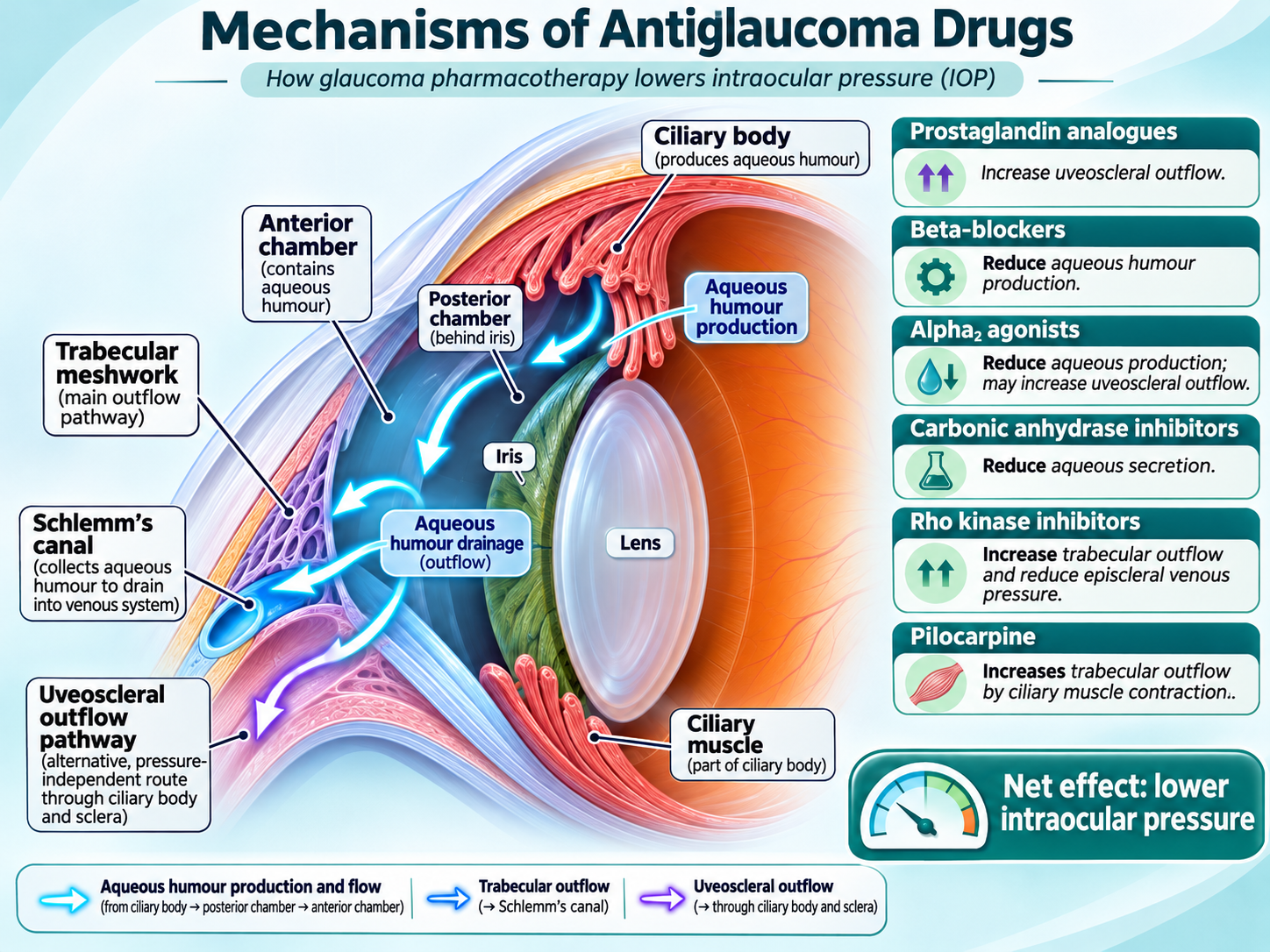
Aqueous humour is produced by the ciliary processes and circulates through the posterior chamber, pupil and anterior chamber. It leaves the eye mainly through two pathways:
-
Conventional (trabecular) outflow: Aqueous humour passes through the trabecular meshwork, Schlemm's canal and collector channels before reaching the episcleral venous circulation.
-
Unconventional (uveoscleral) outflow: Aqueous humour passes through the ciliary muscle and surrounding tissues before leaving the eye.
IOP is determined by the balance between aqueous humour formation and outflow, together with episcleral venous pressure.
In primary open-angle glaucoma (POAG), resistance to aqueous humour drainage, particularly through the trabecular pathway, contributes to elevated IOP in many patients. In primary angle-closure glaucoma, contact between the peripheral iris and the drainage angle obstructs aqueous outflow.
These differences matter because medicines that lower IOP do not necessarily correct the underlying cause of glaucoma. Acute angle closure, for example, usually requires a definitive anatomical intervention in addition to medication.
Classification of Antiglaucoma Drugs
Antiglaucoma medicines can be classified according to their principal effects on aqueous humour dynamics.
| Drug class | Examples | Principal mechanism |
|---|---|---|
| Prostaglandin analogues | Latanoprost, travoprost, tafluprost, bimatoprost | Increase mainly uveoscleral outflow |
| Beta-adrenergic blockers | Timolol, betaxolol | Reduce aqueous humour production |
| Alpha-2 adrenergic agonists | Brimonidine, apraclonidine | Reduce aqueous production; may increase uveoscleral outflow |
| Carbonic anhydrase inhibitors | Dorzolamide, brinzolamide, acetazolamide | Inhibit bicarbonate formation and reduce aqueous secretion |
| Rho kinase inhibitors | Netarsudil | Increase trabecular outflow and reduce episcleral venous pressure |
| Cholinergic agents | Pilocarpine | Contract the ciliary muscle and facilitate trabecular outflow |
| Hyperosmotic agents | Mannitol, glycerol | Create an osmotic gradient that reduces intraocular fluid volume |
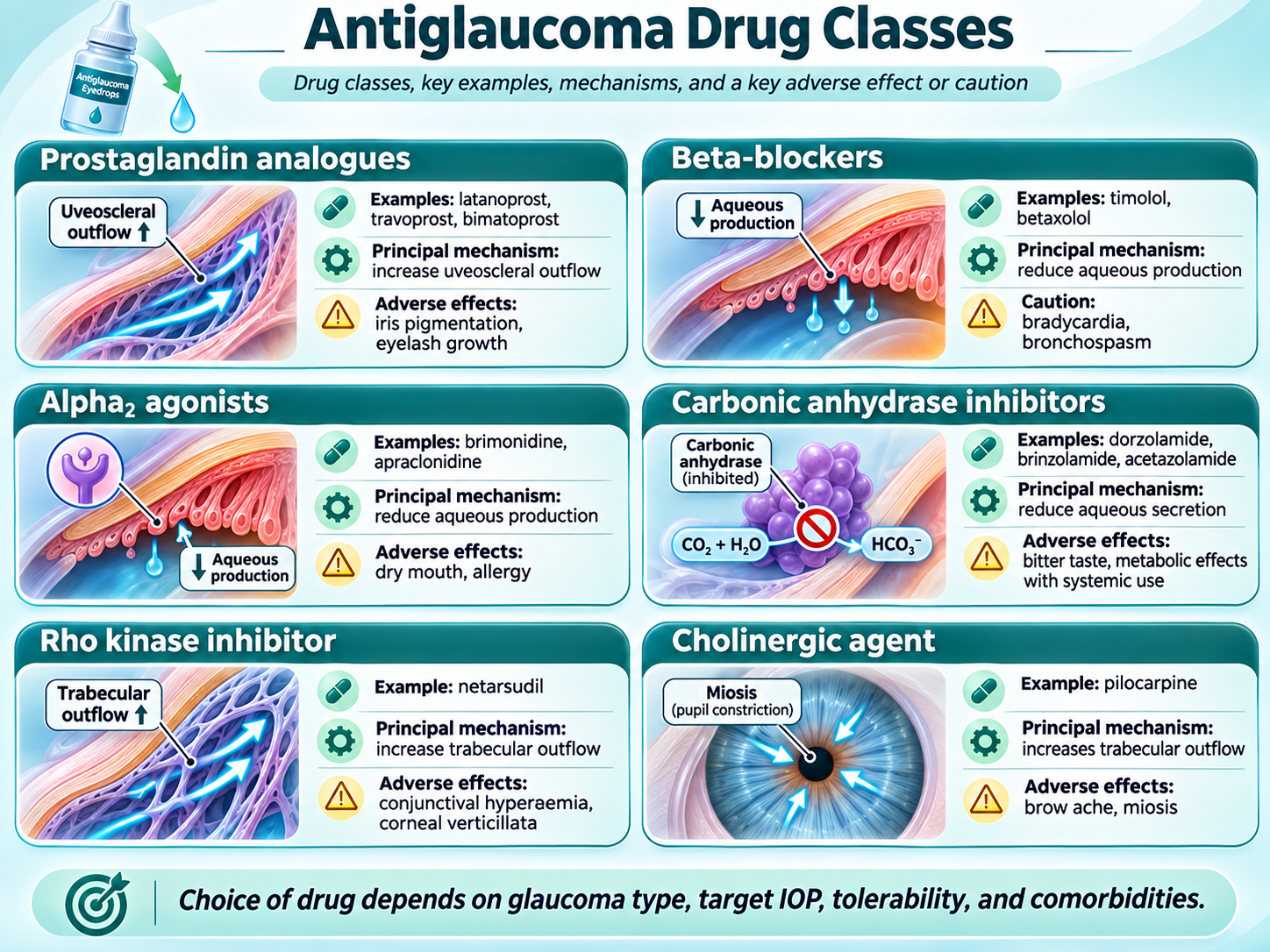
The drug classes have different pharmacological advantages and limitations, making them suitable for different clinical situations [1,2].
1. Prostaglandin Analogues
Prostaglandin analogues are among the most effective topical medicines for lowering IOP and are commonly used as first-choice drug treatment for open-angle glaucoma.
Examples
-
Latanoprost
-
Travoprost
-
Tafluprost
-
Bimatoprost
Mechanism of action
Latanoprost, travoprost and tafluprost act primarily through prostaglandin FP receptors. Receptor activation alters extracellular matrix turnover in the ciliary muscle and associated tissues, reducing resistance to aqueous humour drainage through the uveoscleral pathway.
Bimatoprost is a prostamide with a closely related IOP-lowering effect.
These agents generally reduce IOP by approximately 25–33%, although the response varies between patients and preparations. Most are administered once daily.
Advantages
Prostaglandin analogues provide substantial IOP reduction with convenient dosing and relatively few systemic adverse effects. These characteristics make them suitable for long-term treatment.
Adverse effects
Common or clinically important adverse effects include:
-
Conjunctival hyperaemia and ocular irritation
-
Increased eyelash length, thickness and pigmentation
-
Increased pigmentation of the iris, which may be permanent
-
Darkening of periocular skin
-
Prostaglandin-associated periorbitopathy, including deepening of the upper eyelid sulcus
Caution is appropriate in patients with active intraocular inflammation, a history of herpetic keratitis or risk factors for cystoid macular oedema.
Newer prostaglandin-related treatments
Latanoprostene bunod is a nitric oxide-donating prostaglandin F2α analogue. It releases latanoprost acid, which increases uveoscleral outflow, and a nitric oxide component that promotes relaxation within the trabecular outflow pathway.
Omidenepag isopropyl is a selective prostaglandin E2 receptor subtype EP2 agonist that enhances aqueous outflow. Although often grouped with prostaglandin-related therapies, it has a different receptor target from conventional FP-receptor agonists.
2. Beta-Adrenergic Blockers
Topical beta-blockers lower IOP by reducing the formation of aqueous humour.
Examples
-
Timolol
-
Betaxolol
-
Levobunolol
-
Carteolol
Mechanism of action
Beta-adrenergic receptors in the ciliary epithelium participate in the regulation of aqueous humour secretion. Beta-blockers inhibit these receptors, reducing adrenergically stimulated cyclic AMP signalling and aqueous production.
Timolol blocks both β1 and β2 receptors, whereas betaxolol is relatively selective for β1 receptors.
Topical beta-blockers commonly produce an IOP reduction of approximately 20–25%.
Clinical uses
Beta-blockers may be used when prostaglandin analogues are unsuitable or when additional IOP reduction is required. They are also available in several fixed-dose combination products.
Adverse effects and contraindications
Although administered locally, ophthalmic beta-blockers can enter the systemic circulation through the nasolacrimal drainage system.
Systemic adverse effects include bradycardia, hypotension, bronchospasm, fatigue and reduced exercise tolerance.
Timolol is contraindicated in patients with bronchial asthma, severe chronic obstructive pulmonary disease, sinus bradycardia, second- or third-degree atrioventricular block, overt cardiac failure or cardiogenic shock.
Betaxolol has a relatively lower tendency to cause bronchospasm but does not eliminate respiratory risk.
Topical beta-blockers also require caution when patients are receiving oral beta-blockers or medicines that slow atrioventricular conduction, such as certain calcium channel blockers [5].
3. Alpha-2 Adrenergic Agonists
Alpha-2 adrenergic agonists reduce IOP principally by suppressing aqueous humour formation.
Examples
-
Brimonidine
-
Apraclonidine
Mechanism of action
Activation of presynaptic and postsynaptic alpha-2 adrenergic receptors reduces cyclic AMP-mediated aqueous secretion in the ciliary body. Brimonidine may also increase uveoscleral outflow.
Clinical uses
Brimonidine is used as an alternative or additional treatment in open-angle glaucoma and ocular hypertension.
Apraclonidine is used mainly for short-term IOP reduction, particularly around ophthalmic laser procedures. Its long-term usefulness is limited by tachyphylaxis and ocular allergic reactions.
Adverse effects
-
Allergic or follicular conjunctivitis
-
Ocular redness and irritation
-
Dry mouth
-
Fatigue and drowsiness
-
Systemic hypotension in susceptible patients
Brimonidine can produce marked central nervous system depression and respiratory complications in infants and young children. It is contraindicated in children younger than two years, and additional caution is necessary in older children.
4. Carbonic Anhydrase Inhibitors
Carbonic anhydrase inhibitors (CAIs) reduce the secretion of aqueous humour by acting directly on the ciliary epithelium.
They are available as topical and systemic preparations.
Topical carbonic anhydrase inhibitors
Examples: Dorzolamide and brinzolamide.
Mechanism of action: Carbonic anhydrase catalyses the reversible hydration of carbon dioxide to carbonic acid, facilitating the formation of bicarbonate ions. Bicarbonate transport contributes to aqueous humour secretion.
Inhibition of carbonic anhydrase, particularly carbonic anhydrase II, reduces bicarbonate-dependent ion and fluid transport, thereby decreasing aqueous humour production.
Topical CAIs are commonly used as additional treatment when one medicine does not achieve the desired IOP.
Adverse effects include ocular irritation, burning or stinging, blurred vision and a bitter taste.
Systemic carbonic anhydrase inhibitors
Examples: Acetazolamide and methazolamide.
Oral or intravenous acetazolamide provides stronger systemic inhibition of carbonic anhydrase and can produce a relatively rapid reduction in IOP.
It is particularly useful for short-term management of markedly elevated IOP, including acute angle-closure attacks and selected perioperative situations.
Systemic adverse effects include paraesthesia, fatigue, gastrointestinal disturbances, metabolic acidosis, electrolyte abnormalities and renal calculi.
Acetazolamide requires particular caution in patients with significant renal impairment, pre-existing acid–base disturbances or relevant electrolyte abnormalities. A history of serious sulfonamide-related drug reactions also requires careful assessment.
Because systemic adverse effects become more important with prolonged use, oral CAIs are generally reserved for situations in which topical treatment is inadequate, unsuitable or insufficiently rapid.
5. Rho Kinase Inhibitors
Rho kinase inhibitors act on the conventional aqueous humour drainage pathway.
Example: Netarsudil.
Mechanism of action
The Rho-associated protein kinase (ROCK) signalling pathway regulates cytoskeletal organisation and contractility in cells of the trabecular meshwork and Schlemm's canal.
Inhibition of this pathway alters cellular contractility and reduces resistance to aqueous humour outflow.
Netarsudil also lowers episcleral venous pressure, contributing to its IOP-lowering effect.
Clinical uses
Netarsudil is used to reduce elevated IOP in open-angle glaucoma and ocular hypertension. It may be useful when additional pressure reduction is needed or when other drug classes are unsuitable.
A fixed combination of netarsudil and latanoprost is also available in some markets.
Adverse effects
The principal limitation is ocular tolerability. Adverse effects include conjunctival hyperaemia, instillation-site discomfort, conjunctival haemorrhage and corneal verticillata.
Reticular epithelial corneal oedema has also been reported, particularly in susceptible eyes. New corneal symptoms or reduced vision during treatment require ophthalmic assessment [6].
6. Cholinergic Drugs (Miotics)
Pilocarpine is the principal cholinergic drug used in glaucoma treatment.
Mechanism of action
Pilocarpine is a direct-acting muscarinic receptor agonist.
It contracts the ciliary muscle, increasing tension on the scleral spur and trabecular meshwork. This facilitates conventional aqueous humour outflow.
Pilocarpine also contracts the iris sphincter, causing miosis.
Clinical uses
Pilocarpine has a limited role in contemporary long-term open-angle glaucoma treatment because newer medicines are generally more convenient and better tolerated.
It remains useful in selected cases of angle closure caused by pupillary block.
Adverse effects
-
Brow ache and headache
-
Blurred vision and accommodative spasm
-
Reduced night vision due to miosis
-
Myopic shift
-
Rare retinal complications, including retinal detachment
Pilocarpine should not be used indiscriminately in every case of angle closure. Its value depends on the underlying mechanism. In severe acute pupillary-block angle closure, it may initially be ineffective because very high IOP causes iris sphincter ischaemia.
7. Hyperosmotic Agents
Hyperosmotic agents are used for rapid IOP reduction in selected ophthalmic emergencies.
Examples
-
Intravenous mannitol
-
Oral glycerol
Mechanism of action
These drugs increase plasma osmolality, creating an osmotic gradient that draws water from intraocular tissues into the systemic circulation.
The resulting reduction in ocular fluid volume lowers IOP.
Clinical uses
Hyperosmotic agents may be used in severe acute glaucoma when initial pressure-lowering measures are inadequate or a particularly rapid reduction in IOP is required.
They are not routine medicines for long-term glaucoma management.
Adverse effects
Mannitol can cause fluid and electrolyte disturbances and may precipitate pulmonary oedema or worsen cardiac or renal dysfunction in susceptible patients.
Oral glycerol may cause nausea, vomiting and hyperglycaemia.
Their use requires careful assessment of the patient's systemic condition.
Pharmacotherapy of Primary Open-Angle Glaucoma
The management of POAG begins with assessment of disease severity, optic nerve damage, visual field changes, baseline IOP and risk of progression.
The treating ophthalmologist establishes an individualised target IOP. This is a clinical estimate rather than a fixed pressure suitable for every patient, and it may need to be revised as the disease progresses.
Initial treatment
Prostaglandin analogues are generally the preferred pharmacological option because of their efficacy, convenience and tolerability.
However, eye drops are no longer the only standard initial treatment.
The sixth-edition European Glaucoma Society guidelines recommend both prostaglandin analogues and selective laser trabeculoplasty (SLT) as first-line options. NICE recommends offering 360° SLT to eligible adults with newly diagnosed, non-advanced chronic open-angle glaucoma, with prostaglandin analogues used when SLT is declined, unsuitable, pending or insufficient [1,3].
The six-year results of the LiGHT trial support the use of SLT as an initial treatment. Approximately 69.8% of eyes initially assigned to SLT remained at or below their target IOP without additional medical or surgical treatment at six years. Disease progression was more frequent in the initial eye-drop group [4].
When the initial treatment is insufficient
If IOP remains above target, the clinician should first assess adherence, administration technique and treatment tolerability.
Options include adding a medicine with a complementary mechanism, performing SLT or considering glaucoma surgery.
For example, a patient receiving latanoprost may benefit from adding a carbonic anhydrase inhibitor or another appropriate drug class.
If adequate IOP reduction cannot be maintained or optic nerve damage progresses, treatment should be reconsidered rather than simply continuing an ineffective regimen.
Fixed-dose combinations
Fixed-dose combinations allow two active medicines to be administered in a single preparation.
Examples include:
-
Dorzolamide + timolol
-
Brimonidine + timolol
-
Brinzolamide + brimonidine
-
Latanoprost + timolol
-
Netarsudil + latanoprost
Their main advantages are reduced dosing burden, fewer separate instillations and potentially improved adherence.
However, a combination product retains the adverse effects and contraindications of its individual components. For example, a timolol-containing combination remains unsuitable for a patient with bronchial asthma.
Pharmacotherapy of Acute Angle-Closure Glaucoma
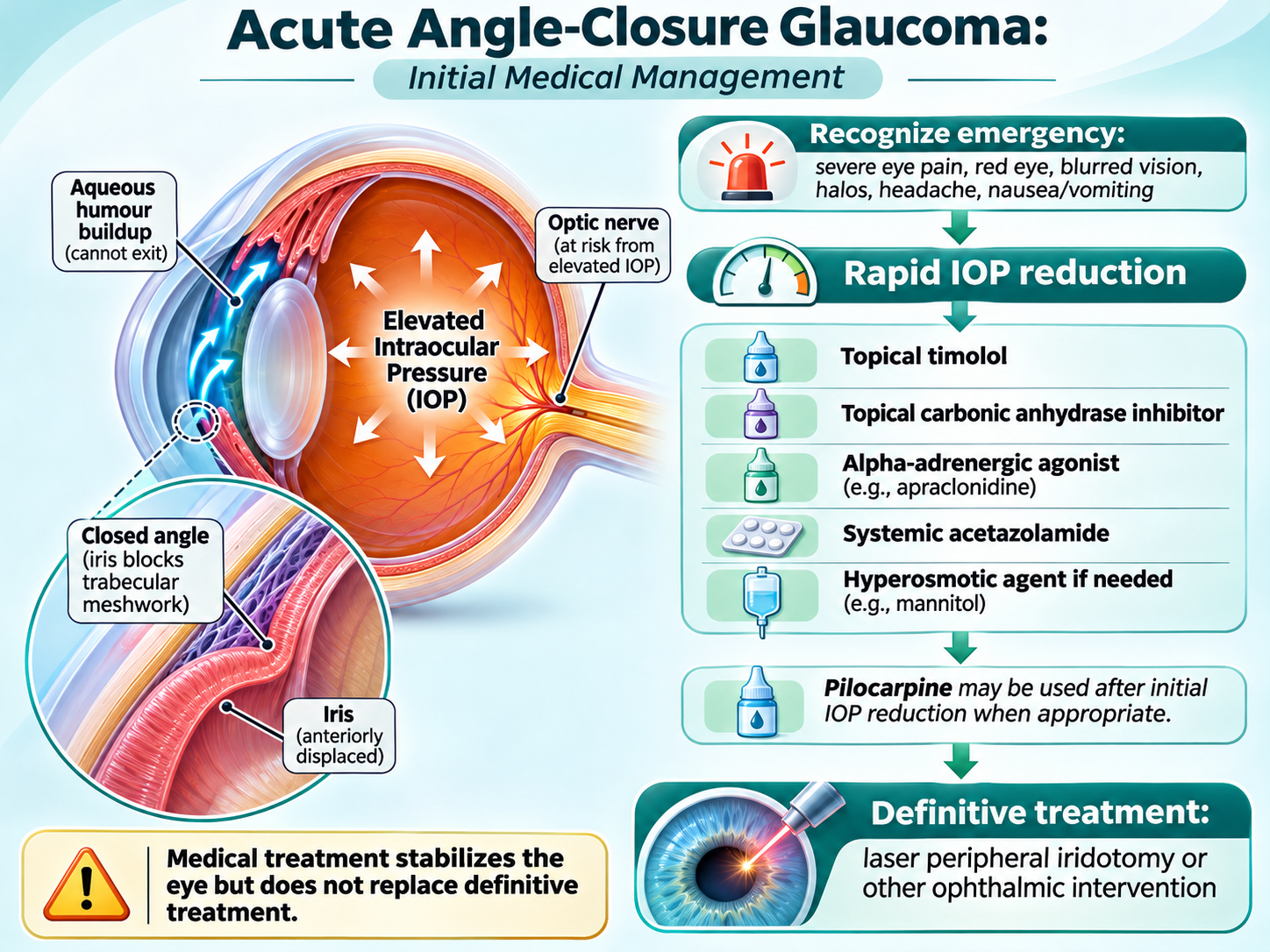
Acute angle closure is an ophthalmic emergency that can cause irreversible visual loss within a short period.
Patients may present with sudden ocular pain, redness, blurred vision, headache, halos around lights, nausea and vomiting.
An immediate ophthalmic assessment is necessary.
Initial medical management
The purpose of emergency pharmacotherapy is to lower IOP rapidly while preparing for definitive treatment.
Depending on the clinical findings and contraindications, treatment may include topical timolol, a topical carbonic anhydrase inhibitor such as dorzolamide, an alpha-adrenergic agonist such as apraclonidine, and systemic acetazolamide.
Hyperosmotic treatment may be required in severe or refractory cases.
Pilocarpine may be administered when appropriate for the mechanism of angle closure, usually after initial IOP reduction if pressure is very high. The Royal College of Ophthalmologists' pathway advises deferring pilocarpine when IOP exceeds 40 mmHg.
The response should be assessed promptly, commonly within 30–60 minutes, with further treatment determined by the ophthalmologist [7].
Definitive treatment
For primary pupillary-block angle closure, laser peripheral iridotomy commonly provides definitive relief of the block. Lens extraction or other interventions may be appropriate depending on the clinical situation.
Medical treatment alone is not sufficient to address every form of angle closure.
Secondary angle closure caused by conditions such as topiramate-associated ciliochoroidal effusion requires a different approach. Pilocarpine may be inappropriate and potentially harmful in these cases.
Pharmacotherapy in Other Forms of Glaucoma
Normal-tension glaucoma
Normal-tension glaucoma is characterised by glaucomatous optic nerve damage despite IOP measurements within the statistically normal range.
Lowering IOP remains the principal established treatment strategy. Prostaglandin analogues, other topical medicines and SLT may be used according to the patient's clinical condition.
Patients who continue to show optic nerve or visual field progression may require a lower target IOP.
Secondary glaucoma
Treatment depends on the underlying cause.
For steroid-induced ocular hypertension or glaucoma, reduction or withdrawal of the causative corticosteroid may be considered when clinically feasible, together with IOP-lowering treatment.
In uveitic glaucoma, control of intraocular inflammation is essential. Drug selection must account for the inflammatory condition, and miotics are generally avoided in active uveitis.
Neovascular glaucoma often requires management of retinal ischaemia and neovascularisation alongside pressure-lowering treatment and, frequently, laser or surgical intervention.
Childhood glaucoma
Childhood glaucoma differs from adult glaucoma in both its causes and treatment.
Surgery is often the main treatment, particularly for primary congenital glaucoma. Medicines may be used temporarily before surgery or as additional treatment.
Drug safety is especially important in children because systemic absorption can produce more serious effects relative to body size.
Newer Drug-Delivery Approaches
Long-term treatment adherence remains a challenge in glaucoma. Some patients have difficulty administering drops, while others experience ocular surface irritation or cannot reliably maintain several daily doses.
Sustained-release drug-delivery systems aim to reduce reliance on daily eye drops.
Two examples are:
Bimatoprost intracameral implant (Durysta): A biodegradable implant that releases bimatoprost within the eye. In the United States, its approved use is limited to one administration per eye because repeated administration has been associated with corneal endothelial cell loss.
Travoprost intracameral implant (iDose TR): A non-biodegradable implant that releases travoprost over an extended period. Updated US prescribing information permits re-administration in appropriately selected patients who satisfy specified corneal endothelial safety criteria [8].
These treatments require specialist assessment and are not suitable for every patient. Availability and regulatory indications vary by country.
Improving the Effectiveness and Safety of Glaucoma Pharmacotherapy
Successful glaucoma treatment depends on more than choosing an effective medicine.
Patients need to understand that glaucoma is often asymptomatic during its early stages and that treatment may be necessary even when vision appears normal.
Correct eye-drop administration also matters. A single drop should be placed in the lower conjunctival sac without touching the dropper tip to the eye. Gentle eyelid closure and nasolacrimal occlusion can reduce systemic drug drainage and absorption.
When more than one topical ophthalmic preparation is prescribed, a gap of at least five minutes between different drops is generally recommended.
Patients with persistent ocular surface irritation may benefit from preservative-free preparations, when appropriate.
Follow-up should include IOP measurement, optic nerve assessment, retinal nerve fibre layer imaging and visual field testing as clinically indicated. An acceptable IOP reading alone does not guarantee that the disease is stable.
Is Neuroprotection an Established Pharmacological Treatment?
Glaucoma treatment research has examined agents intended to protect retinal ganglion cells independently of their effects on IOP.
Various mechanisms have been investigated, including excitotoxicity, oxidative stress, mitochondrial dysfunction and impaired cellular survival signalling.
Although these approaches remain scientifically important, clinical evidence is currently insufficient to recommend a specific neuroprotective medicine as an established treatment for glaucoma.
The sixth-edition European Glaucoma Society guidelines continue to identify IOP reduction as the principal evidence-based treatment strategy [1].
Conclusion
Pharmacotherapy remains an important part of glaucoma management, with several drug classes available to reduce aqueous humour production or improve its outflow. Prostaglandin analogues are usually the first choice when topical medical treatment is indicated, while beta-blockers, alpha-2 agonists, carbonic anhydrase inhibitors and Rho kinase inhibitors provide alternatives or additional IOP reduction.
Treatment must be tailored to the type of glaucoma, the extent of optic nerve damage and the patient's systemic health. Acute angle closure requires emergency management, whereas chronic open-angle glaucoma generally needs sustained treatment and regular assessment.
The choice between medication, laser treatment and surgery should be guided by the pressure reduction needed to preserve vision, rather than by IOP measurements alone.
References
-
Pazos M, Traverso CE, Viswanathan A, et al. European Glaucoma Society—Terminology and guidelines for glaucoma, 6th edition. Br J Ophthalmol. 2025;109(Suppl 1):1–212. https://doi.org/10.1136/bjophthalmol-2025-egsguidelines
-
Gedde SJ, Bowden EC, Challa P, et al. Primary open-angle glaucoma Preferred Practice Pattern®. Ophthalmology. Published online February 9, 2026. https://doi.org/10.1016/j.ophtha.2025.12.029
-
National Institute for Health and Care Excellence. Glaucoma: diagnosis and management. NICE guideline NG81. Published 2017. Updated January 26, 2022. https://www.nice.org.uk/guidance/ng81
-
Gazzard G, Konstantakopoulou E, Garway-Heath D, et al. Laser in glaucoma and ocular hypertension (LiGHT) trial: six-year results of primary selective laser trabeculoplasty versus eye drops for the treatment of glaucoma and ocular hypertension. Ophthalmology. 2023;130(2):139–151. https://doi.org/10.1016/j.ophtha.2022.09.009
-
DailyMed. Timolol maleate ophthalmic solution: prescribing information. National Library of Medicine. https://dailymed.nlm.nih.gov/dailymed/search.cfm?query=timolol%20maleate%20ophthalmic
-
DailyMed. Rhopressa (netarsudil ophthalmic solution) 0.02%: prescribing information. Revised January 2026. https://dailymed.nlm.nih.gov/dailymed/drugInfo.cfm?setid=7d4f0e3a-5b86-4c43-982a-813b22ae7e22
-
The Royal College of Ophthalmologists. The Management of Angle-Closure Glaucoma. Clinical guideline. London: RCOphth; 2022. https://www.rcophth.ac.uk/guidance-resources/management-of-angle-closure-glaucoma-exective-summary/
-
DailyMed. iDose TR (travoprost intracameral implant): prescribing information. Updated March 2026. https://dailymed.nlm.nih.gov/dailymed/drugInfo.cfm?setid=92f6d3e2-8328-47df-972c-23008f4a1c1c
Educational note: This article is intended for medical and pharmacy students and healthcare professionals. Treatment decisions should follow specialist assessment, applicable local guidelines and current product prescribing information.
Platform Administrator
Keep reading

Lipids: Basic Chemistry for Clinical Practice
A grounding in lipid chemistry for medical, pharmacy and nursing students: how fatty acids, triglycerides, phospholipids and cholesterol are built, why saturation and chain length change melting behaviour, how lipoproteins carry lipids in plasma, and where this chemistry explains lipid-lowering drug targets and laboratory measurements.

Amino Acids: Basic Chemistry for Medical Educators and Senior Students
A teaching-focused primer on the basic chemistry of amino acids. It covers the shared backbone, side-chain classification, acid-base behaviour and zwitterions, chirality and peptide bond formation, with pointers to the clinical and pharmacological relevance students meet later in the course.

Carbohydrates: Basic Chemistry for Medical Learners
This article outlines the basic chemistry of carbohydrates for medical, pharmacy and nursing teaching. It covers definitions, monosaccharide structure, stereochemistry and isomerism, ring formation and mutarotation, glycosidic bonds, reducing properties, polysaccharides and glycoconjugates, with teaching points that connect structure to metabolism and clinical practice. Regional variation in terminology and curricula is noted where relevant.
Comments
No comments yet: be the first to add one.
Log in to join the discussion.